How to Find the Best Next Move in Every Chess Position
In chess, finding the best move isn’t just about spotting tactics or memorizing openings; it’s about understanding the logic of a position. Every single move carries purpose, whether it’s improving your worst placed piece, defending a weakness, or launching an attack. The strongest players don’t randomly “see” the best move; they calculate, evaluate, and compare possible continuations based on principles.
In this blog, we’ll go step by step through the process of finding the best next move in any position. You’ll learn how to think like a master: choosing candidate moves, evaluating positions objectively, and verifying your decisions through chess engines like Stockfish.
Step 1: Start with a General Evaluation of the Position
Before jumping into the calculation, take a step back and ask yourself: what’s going on here?
A good position evaluation considers:
- Material balance – Are you up or down in pieces or pawns?
- King safety – Whose king is more exposed?
- Piece activity – Which side’s pieces are controlling more squares?
- Pawn structure – Are there weaknesses, isolated pawns, or open files?
- Control of key squares or files – Who dominates the center as well as important files and diagonals?
For example, imagine this situation: You have doubled pawns, but in return you’ve gained open files for your rooks and quicker piece activity. Your opponent’s king is still uncastled and stuck in the center.
Although the material is equal and your pawn structure looks worse on paper, the dynamic factors favor you. Open files become more valuable when the king is unsafe, and piece activity matters more than long-term pawn weaknesses.
Key idea: The best move is dictated by the position’s demands — when you have activity and your opponent has king safety issues, you should play actively, not “correct” your structure.
Try to evaluate the following position using the criteria above before reading further:
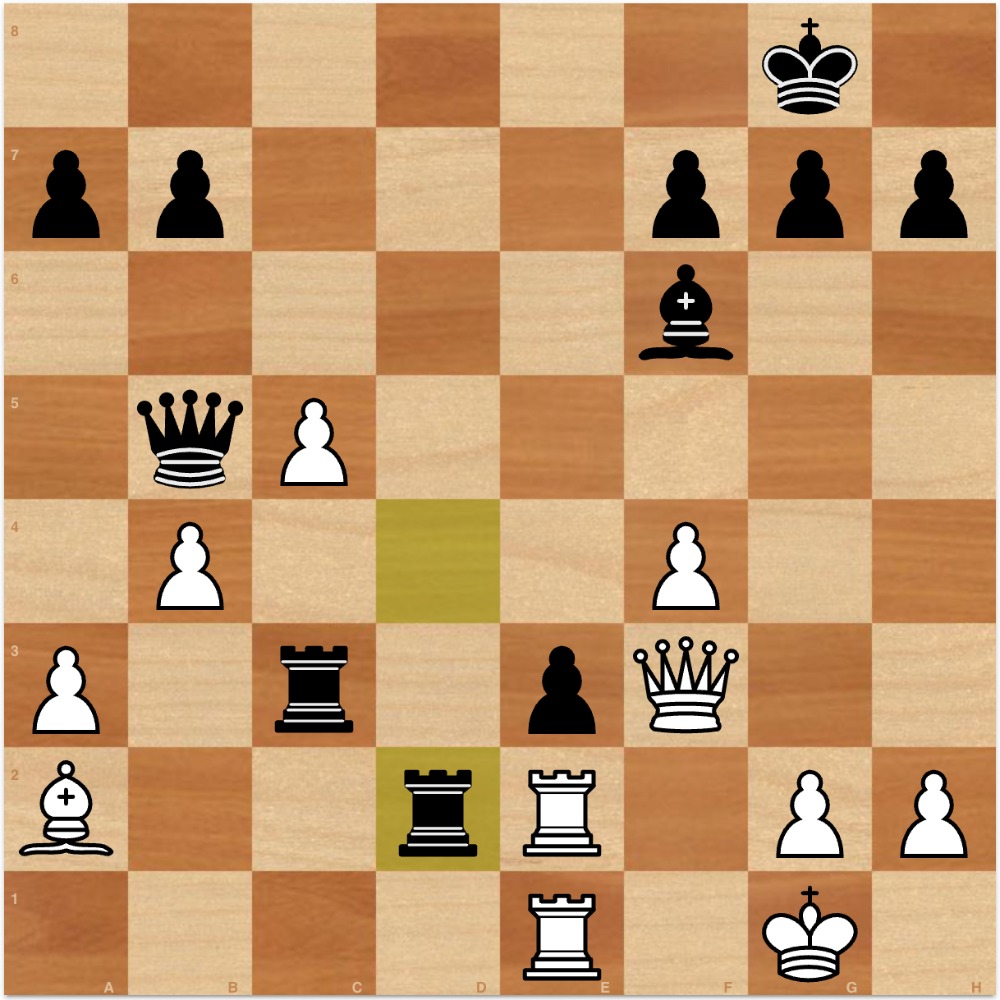
When you’re ready, let’s see if we have the same thoughts about this position:
Material is equal, but the position heavily favors Black because of activity and coordination. Black’s rooks are already on the 3rd and 4th ranks, actively penetrating White’s position, while White’s rooks are passive and disconnected. The advanced e3-pawn is a major positional factor: it restricts White’s pieces, blocks coordination, and forces defensive concessions. Black also controls key central squares and files, especially along the e- and c-files, while White’s pieces are placed passively and tied to defense.
Step 2: Identify Candidate Moves
Once you understand what’s happening, the next step is to list out candidate moves, a few logical possibilities worth considering before calculating.
This is where many players go wrong. They jump straight into calculating one move, get lost in variations, and forget to compare other options. Try instead generating 2–4 good candidates first.
Typical candidate move types:
- Captures – forcing changes in the position
- Checks – immediate forcing moves to limit responses
- Threats – moves that attack a piece or create tactical problems
- Improving moves – quiet moves that might better the position of your pieces or pawns.
- Find the Candidates Moves:
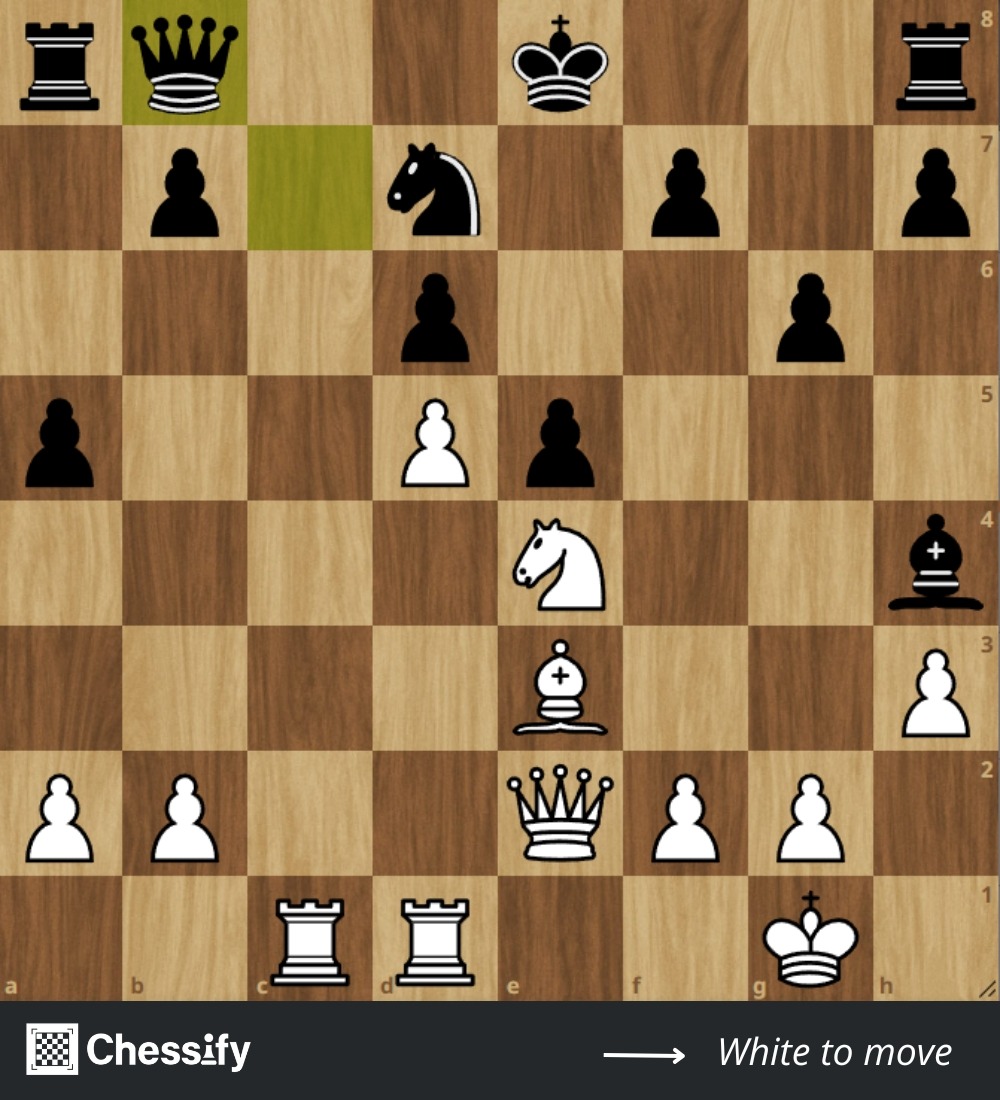
You can see right away that Black’s king is still stuck in the center, while White’s king is already safe. If White manages to open the center — for example with f4 — White’s pieces will suddenly become very dangerous.
But there’s a catch: if White hesitates even for a moment, Black will castle on the next move and complete development. That’s why White has to act immediately — either by preventing castling with moves like Bh6, or by finding an immediate tactic that takes advantage of the uncastled king.
Some of the main candidate moves to prevent castling include:
- Qb5 — if Black castles, the knight on d7 becomes vulnerable.
- Bh6 — directly stops Black from castling and exerts strong pressure on the dark squares.
But what about the second option — a tactical solution? For that, you’ll need to calculate.
Step 3: Calculate Each Candidate Move Logically
Now that you have candidate moves, it’s time to calculate. But how deep should you go?
A simple yet powerful framework is the three-level calculation method:
- Immediate consequences: What happens in 1–2 moves? (tactics, threats)
- Short-term plan: What will the position look like after the dust settles? (who controls the center, open files, etc.)
- Long-term potential: Who benefits in the endgame or after exchanges?
When calculating, visualize each move carefully. Avoid “hope chess”, don’t assume your opponent will play what you want. Instead, always look for their best reply.
Take your time to calculate some moves:
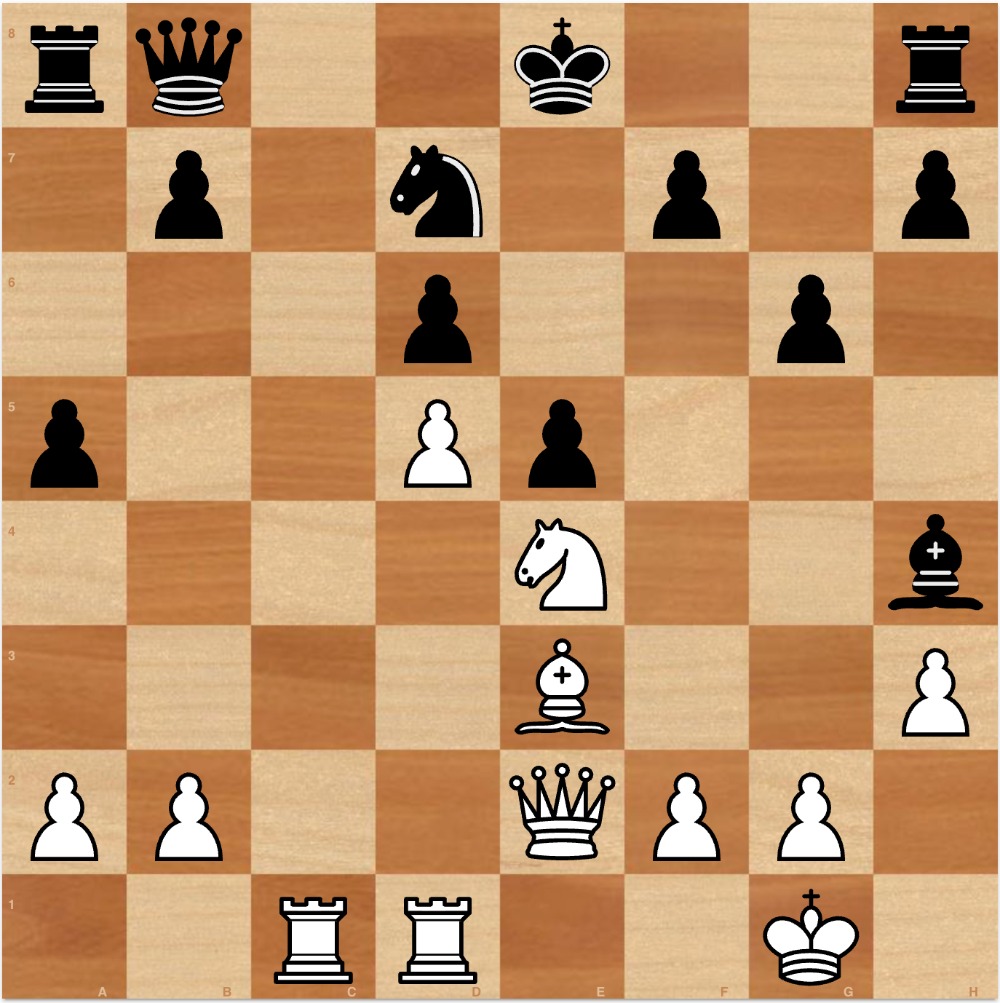
In the previous section, we saw the plans White can use to stop castling. However, if you briefly scan the position for tactics — checks, pins, and captures — you might find a concrete solution that wins the black Queen:
1. Rc8, Qxc8
2. Nxd6, Ke7
3. Nxc8
Step 4: Evaluate the Resulting Positions Objectively
When calculating the candidate moves, compare the resulting positions using your evaluation framework. Think like this:
- Which position gives me better piece activity?
- Is my King safer in this line?
- Do I have more control of the key squares?
It’s not always about who’s winning immediately. Sometimes the best move simply holds a difficult position. Other times, a quiet, improving move is stronger than a flashy tactic that can be neutralized with accurate defense.
When you’re torn between two moves, ask yourself: after my opponent’s best reply, which position would I feel more comfortable playing? The move that leaves you with better coordination and fewer weaknesses is usually the right one.
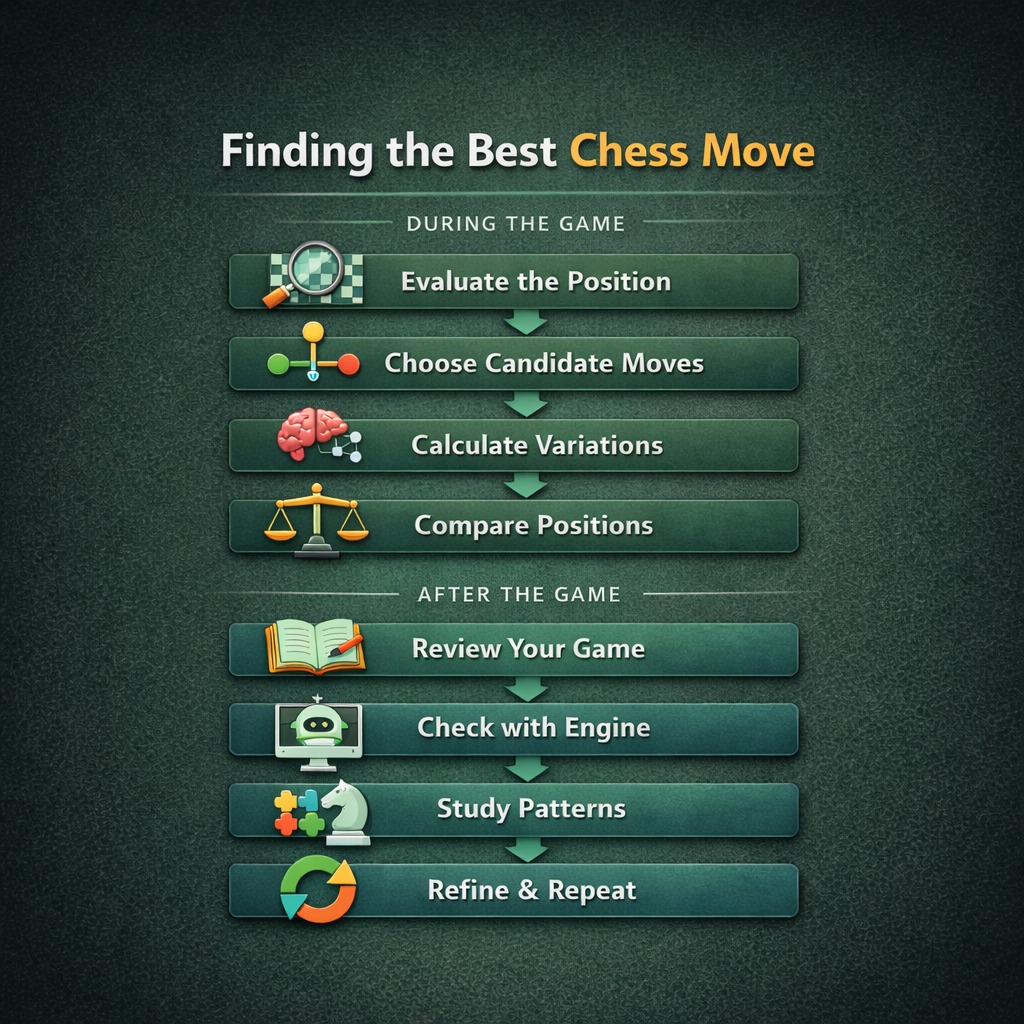
Now that you know how to approach finding the best move during a game, it’s worth stepping back for a moment. The next sections aren’t things you consciously run through at the board. Instead, they’re habits you build away from the game that make your evaluations faster, clearer, and more reliable the next time you sit down to play.
Step 5: Use Engines to Verify, Not Replace Your Thinking
Modern chess engines like Stockfish are incredibly powerful, but they shouldn’t replace your own thinking. Their main purpose is verification — to check whether you missed something critical — not to tell you what to think.
When reviewing your games:
- First analyze the position on your own and choose the moves you would play.
- Write down your reasoning: what you were aiming for, what you were worried about, and which lines you calculated.
- Only then turn on an engine to see what you overlooked or misjudged.
The most important part isn’t the engine’s evaluation number, but the difference between its choices and yours. If the engine suggests another move, try to understand what you missed — a tactical detail, a positional weakness, or a long-term plan you didn’t consider.
If you use engines this way, they will become training partners rather than substitutes for thinking.
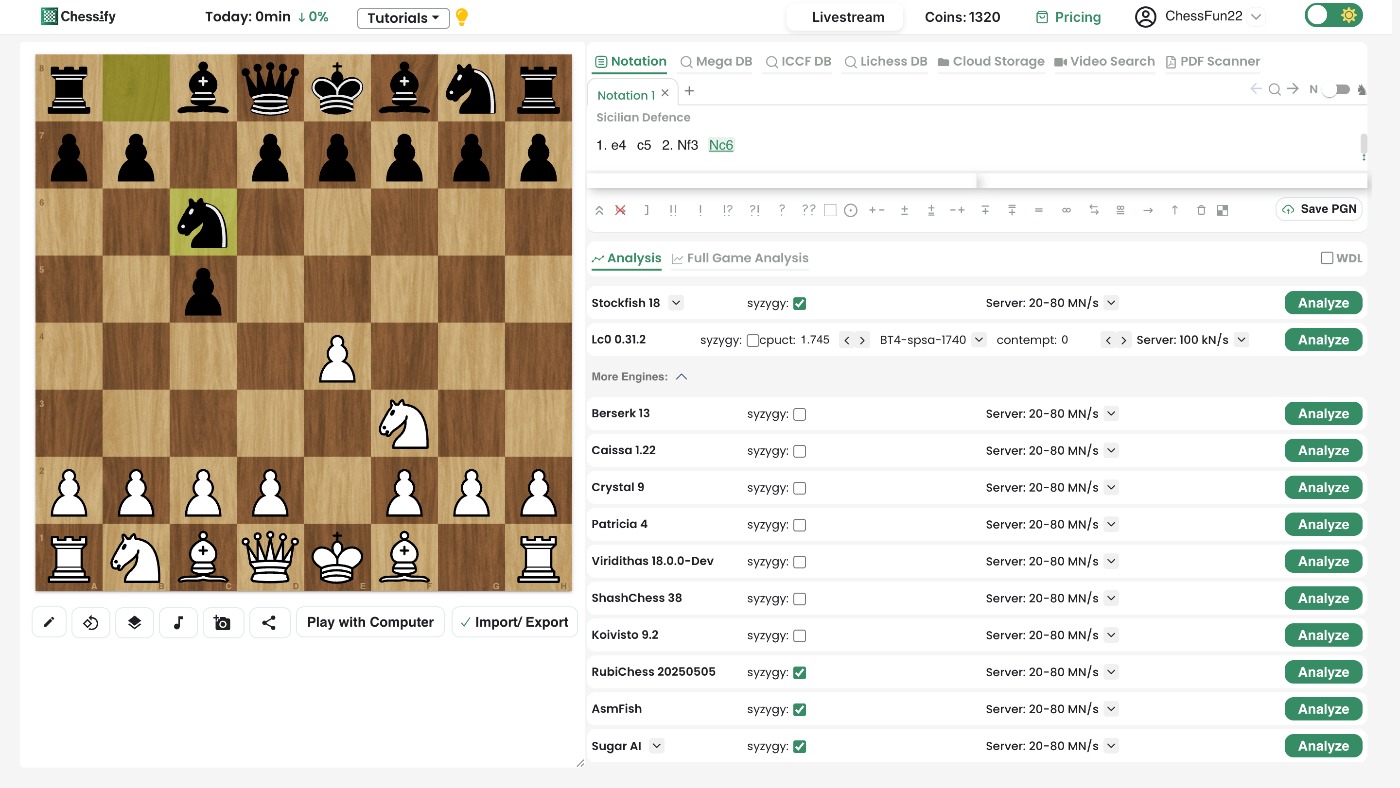
If you want access to strong engines without downloading anything, you can try Chessify for free. Subscribing gives you access to powerful cloud servers, allowing deep analysis at high speed without overloading your computer.
Step 6: Recognize Patterns and Typical Plans
Over time, your brain starts recognizing recurring positional patterns. In many cases, the best move doesn’t come from deep calculation alone, but from pattern recognition combined with concrete analysis.
Common examples include ideas like
- the minority attack in Queen’s Gambit structures,
- typical pawn breaks such as …d5 in the Sicilian or e4 in the French,
- standard piece maneuvers like Nd2–f1–g3 in closed positions.
When studying master games or analyzing positions with a database, focus on why a strong player chose a particular move. That underlying logic tends to repeat itself and gradually becomes part of your own thinking.
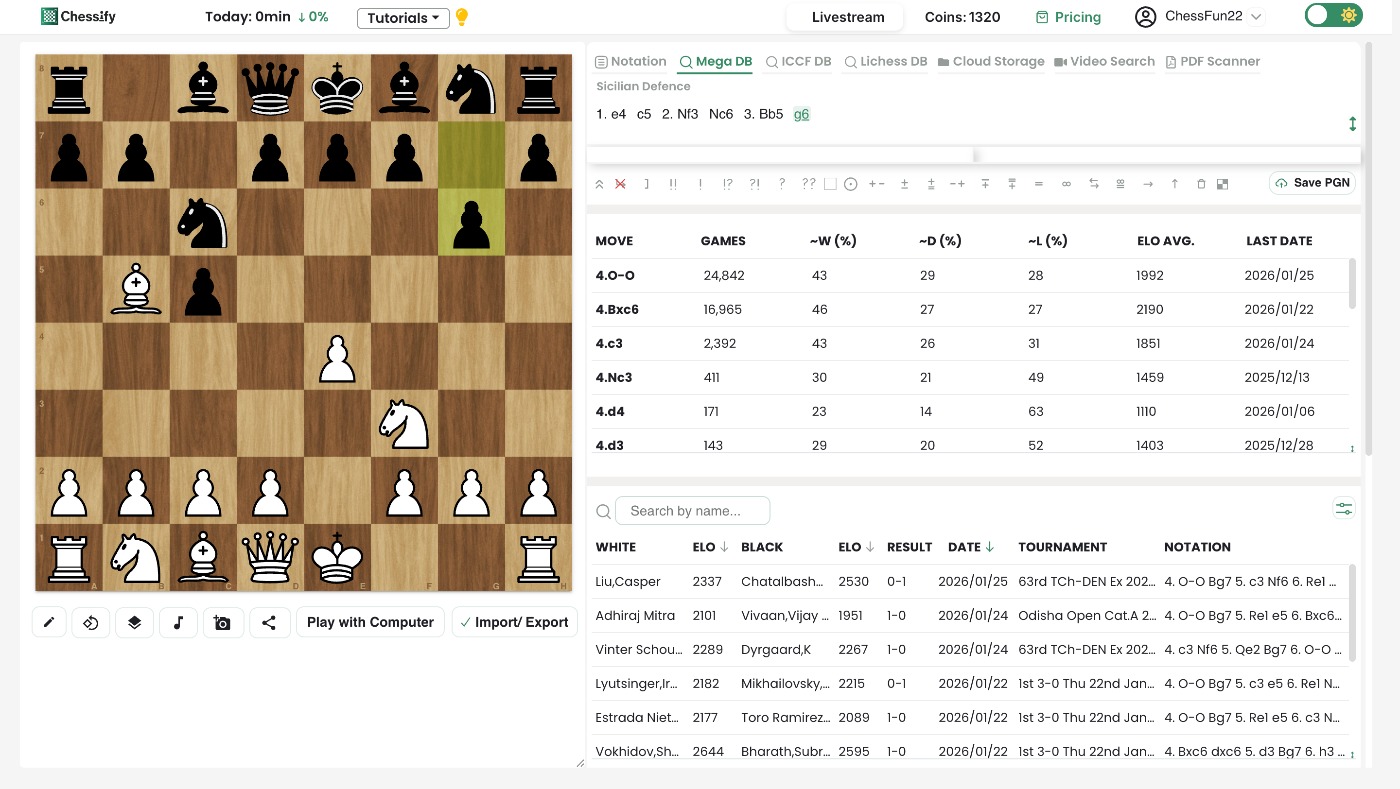
You can explore these recurring ideas using a large game database, such as the one available on Chessify, which contains millions of tournament games. By looking at how strong players handled similar structures, you’ll learn to recognize typical plans more quickly in your own games.
Step 7: Manage Time and Emotions During Games
Even if you know how to find the best move, playing it under pressure is a different challenge.
When time is short, rely on the patterns and structures you’ve already internalized — that intuition exists for a reason. At the same time, avoid letting emotions dictate your decisions. Moves like “I must attack now” or “I should trade everything to be safe” are often reactions to stress, not to the position itself.
If you don’t see a clear win or a concrete tactic, choose a solid move that keeps your position healthy and limits your opponent’s options. Good calculation happens when your thinking stays calm, structured, and connected to the position — even when the clock is ticking.
Step 8: Review and Refine
After every serious game, spend some time reviewing it. This habit is one of the fastest ways to improve your ability to evaluate positions in future games.
Start by replaying the game on your own, without an engine. You don’t need to “find the truth” yet — just try to understand what you were thinking during the game. Pay attention to moments where you felt unsure, rushed, or uncomfortable. Those moments usually point to positions you don’t fully understand yet.
In the opening, focus on whether you followed basic opening principles and known theory. Compare your moves with standard opening ideas and a few high-level games in the same opening. As a beginner or intermediate player, sticking to well-known plans is far more useful than trying to invent something new every game.
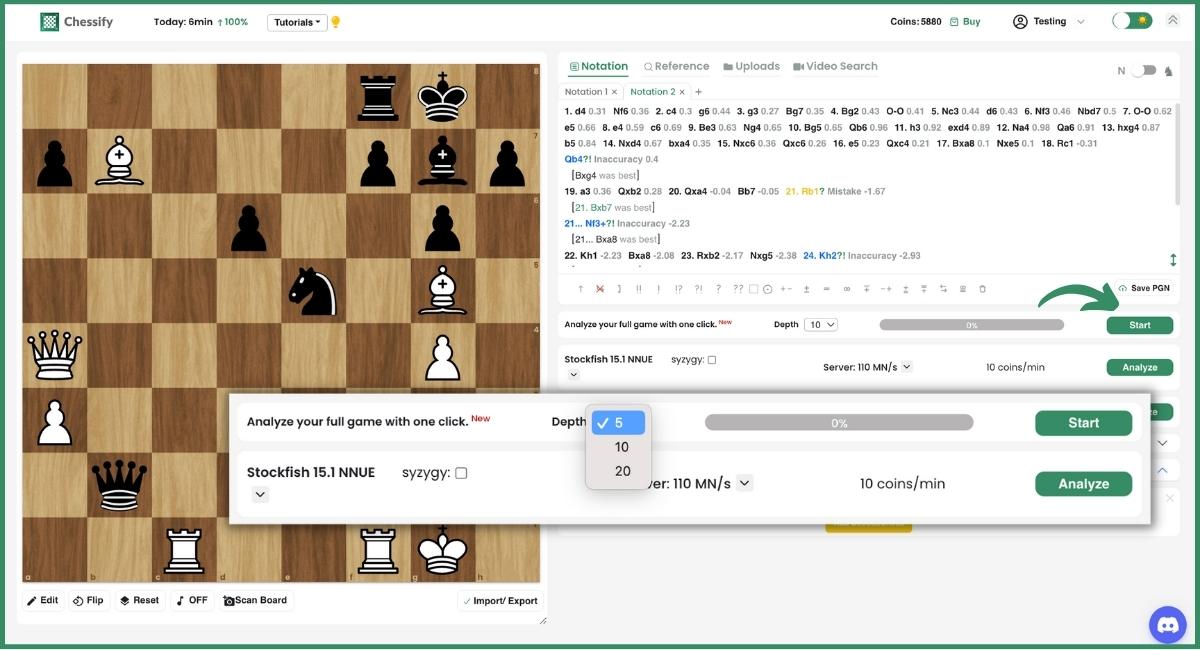
Once you’re out of theory or the position becomes unfamiliar, engines become especially helpful. Use them to quickly spot tactical mistakes, missed threats, or blunders you didn’t notice during the game. Over time, you’ll start recognizing the same types of mistakes repeating — and that awareness makes future evaluations much easier and faster.
If you want to do all of this in one place, you can upload your PGN to Chessify, explore opening theory and professional games, and use engines to check critical moments. Used consistently, this kind of review turns each game into a practical lesson that carries over to your next one.
Final Thoughts
Finding the best move in chess is a skill built over time through consistent, structured thinking. Every position tells a story — and your task is to understand what the position is asking for before choosing the next move.
By following a simple framework
- evaluate the position,
- identify candidate moves,
- calculate logically,
- and compare the resulting positions,
you’ll start seeing the board more clearly and making stronger decisions, move after move.
The real progress comes after the game. Reviewing your decisions, checking missed ideas, and learning from recurring patterns is what gradually sharpens your intuition and makes future evaluations easier.
If you want to practice this process more effectively, you can try Chessify with a 7-day free trial. It gives you access to strong engines and a large game database, making it easier to review your games, study openings, and spot mistakes — without committing upfront.
Use it as a study tool, not a shortcut, and focus on understanding why moves work. That’s how you find not just the best next move, but become a better chess player overall.